








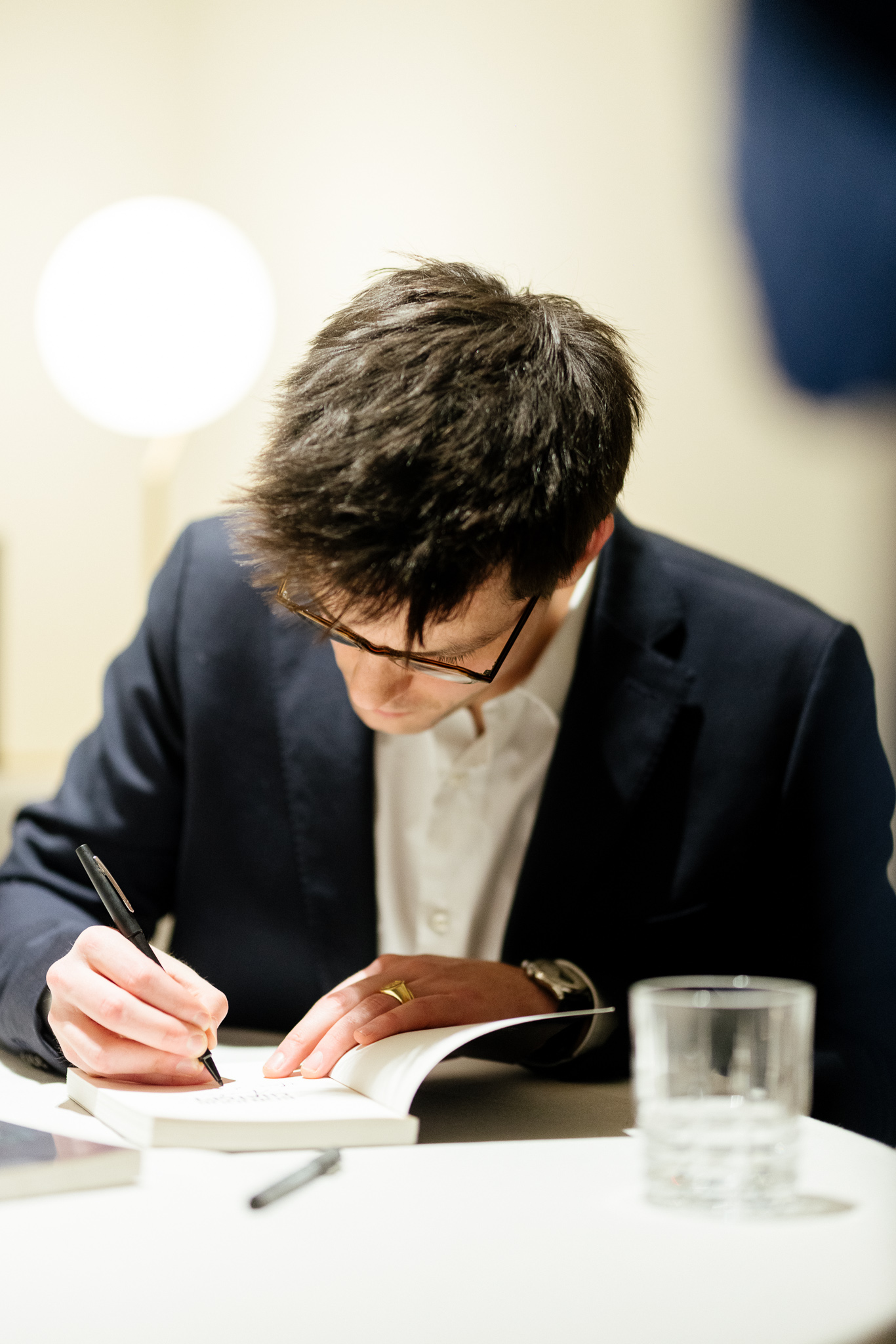
Driven by a passion for philosophy and technology, Louis de Diesbach believes that a new kind of relationship with technology is possible—one that must be built on philosophy and an awareness of the true issues and questions that technology raises.

The question isn’t about whether there will be a so-called "intelligence war" between AI and us. Rather, we must address the question AI itself cannot answer: the question of meaning.




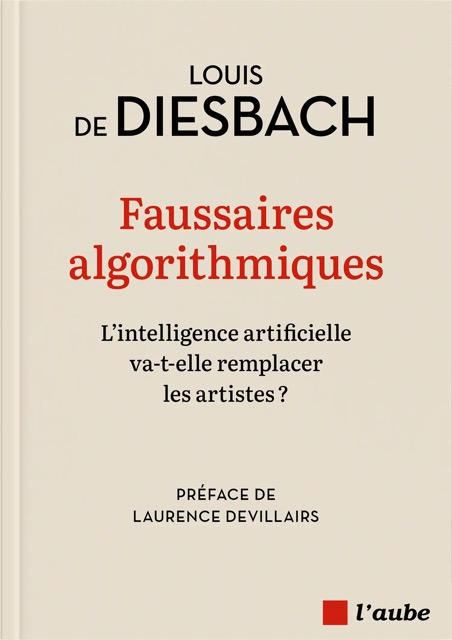

Drawing on more than 120 interviews with people in the art world, this book uses artistic creation as a prism to question AI, revealing a unique resistance: faced with a technology that standardizes, art shows us our need to break free from strictly mathematical logic.

Books that talk about artificial intelligence have been found in spades since 2022 and the arrival of generative AI in our lives. But those who make us think about this subject without falling into excess or caricature are unfortunately too rare. Faussaires algorithmiques is one of them. Radically nuanced, with perspective and without panic, Louis de Diesbach asks us, through his reflections on creation in the algorithmic era, a dizzying question: faced with the power of AI, what are we going to refuse to delegate to it tomorrow?

In this work, Louis de Diesbach insightfully explores why people tend to attribute human traits to AI tools. Behind what may seem like a simple, superficial exchange with ChatGPT lie fundamental issues and a broader social vision. Conversations with AI are not neutral acts. As financial stakes grow, these machines also shape societal debate.
Arguing the axiom of technology’s non-neutrality, the author dives into the complex mechanisms at work behind a simple ‘hello’—those guiding the machine, first of all, like the algorithmic logic of language models, but especially the deeper forces that drive us to inevitably anthropomorphize AI.

Through an original, multidisciplinary approach—philosophical, sociological, psychological, economic, and ethical—Louis de Diesbach delivers a brilliantly researched investigation into our relationship with technology and our "half-victim, half-accomplice" role in our submission to the digital world.
This work is dedicated to voluntary servitude, taking us back before the dawn of artificial intelligence to when La Boétie questioned our inclination to obey authority and accept submission.
Loving Our Servitude’ provides a fascinating view of algorithms, the flaws and cognitive shortcuts that allow social networks to expand their reach. It also ends with a beautiful tribute to wandering, freedom, and the vulnerability that enrich our humanity.
Privacy is important to us, so you have the option of disabling certain types of storage that may not be necessary for the basic functioning of the website. Blocking categories may impact your experience on the website.


